
Home > Blog
For those who plan to visit Wae Rebo Village, it is important to understand the taboos that must not be violated, especially during traditional ceremonies. Every place has its own rules and values that should be respected, and the same applies to Wae Rebo, an indigenous village that continues to uphold ancestral traditions.
Wae Rebo is a remote traditional village located in Manggarai Regency, East Nusa Tenggara, and is widely known as a cultural tourism destination. Situated at an altitude of approximately 1,200 meters above sea level, the village consists of only seven cone-shaped traditional houses known as Mbaru Niang, which to this day remain the center of the community’s social and spiritual life. Believed to be over 1,200 years old, Wae Rebo is rich in historical stories passed down through generations.
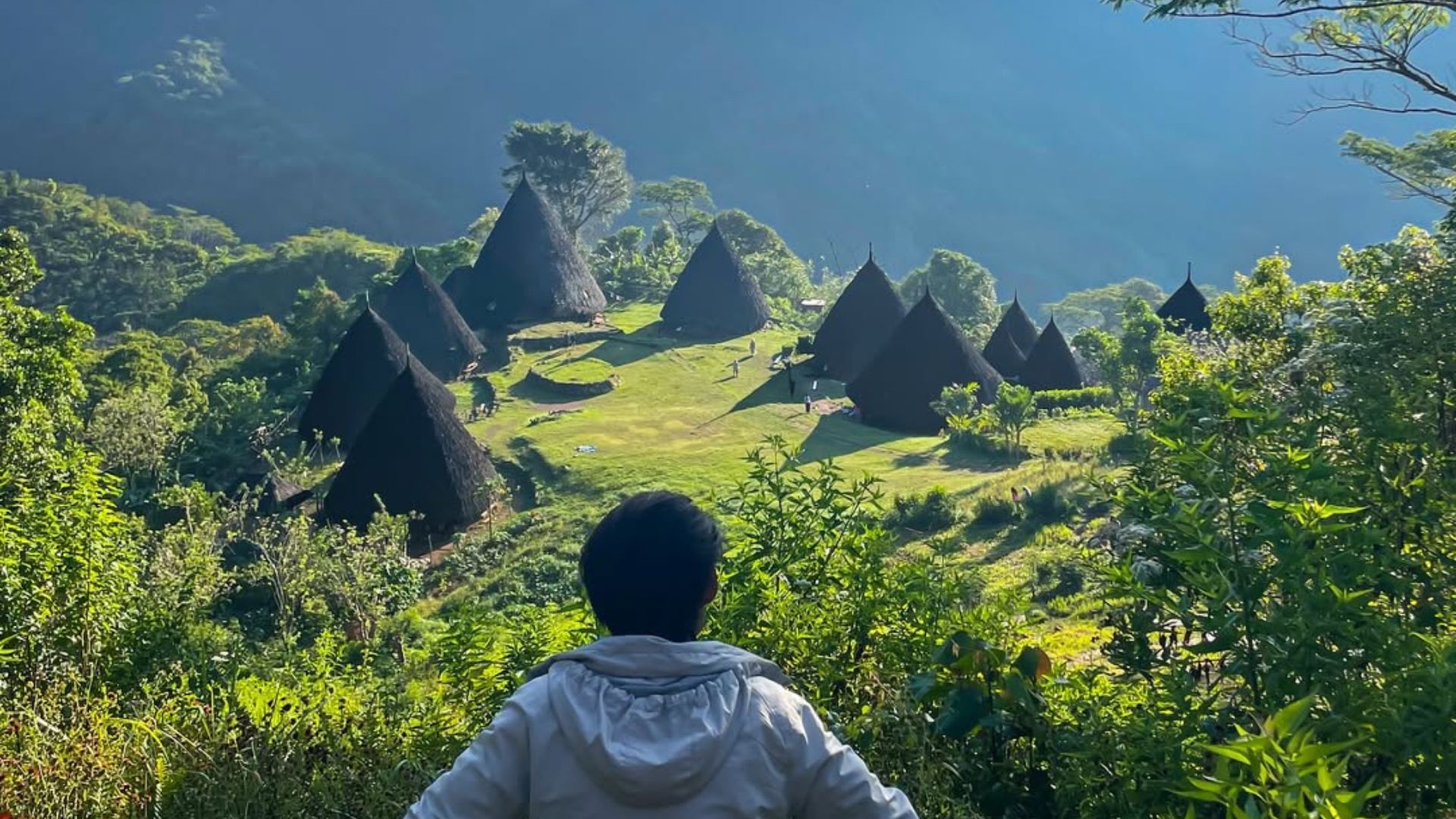
The history of Wae Rebo cannot be separated from ancestral stories that have been orally transmitted from generation to generation. According to local narratives, the ancestors of Wae Rebo trace their origins to a figure named Empo Maro, who is believed to have come from Minangkabau, Sumatra.
Empo Maro is said to have left his homeland after being falsely accused and facing threats to his life. During his escape, he sailed as far as Flores and lived nomadically, moving between several regions, including Gowa in Sulawesi. Throughout his journey, Empo Maro eventually met a woman who later became his wife.
His long journey came to an end after a spiritual experience. According to local belief, one night Empo Maro dreamed of a wise elder who instructed him to settle and build a community in a place called Wae Rebo. Although unfamiliar with the figure in his dream, Empo Maro believed it to be a message from the ancestors. He then searched for the place and, upon reaching the mountainous area of Manggarai, decided to settle there with his wife.
Since then, Wae Rebo has developed into an indigenous community living in the highlands at an elevation of about 1,200 meters above sea level. Surrounded by mountains and valleys, the village is often covered in thick mist, which later earned it the nickname “the village above the clouds.
Beyond its ancestral history, Wae Rebo also holds various folk tales and local beliefs. One story frequently passed down through generations speaks of the existence of small-bodied beings, often referred to as “little people,” who are believed to have once lived—or may still live—in the forests surrounding Wae Rebo.
In local belief, these beings are not considered ordinary humans, but rather guardians of nature or spiritual entities that coexist with humans. Stories about the little people are often linked to moral lessons, reminding people not to be greedy, not to damage the forest, and to always maintain respect toward nature.
Although these stories have never been scientifically proven, they continue to live on as part of oral tradition and serve as a reminder of the importance of maintaining balance between humans and the environment.
After learning about the history of Wae Rebo, one can easily imagine how deeply rooted and resilient the culture of this village truly is.
Lombok is part of the Lesser Sunda Islands, located just east of Bali. It belongs to the West Nusa Tenggara province and is surrounded by smaller gems like the Gili Islands and Sumbawa.
As cited from Instagram account @jelajahtimur, there are seven taboos that visitors must observe while staying in Wae Rebo Village:
Exploring Wae Rebo is not only about appreciating its visual beauty, but also about understanding and respecting a way of life that has been passed down through generations. The taboos that exist are not restrictions, but guardians of harmony between humans, culture, and nature. By respecting and following these customary rules, visitors play a role in preserving the uniqueness of Wae Rebo, ensuring that this “Village Above the Clouds” remains preserved as a living testament to enduring local wisdom.
3 Island Liveaboard offers a relaxed and immersive way to explore the breathtaking waters of Komodo National Park and the Flores Sea. Designed for travelers who want to experience the islands at a comfortable pace, the liveaboard combines the freedom of sailing with the simple pleasure of waking up surrounded by turquoise waters, dramatic landscapes, and untouched tropical scenery.
| Trip Duration | Room Type | Package Type | Price (IDR) / Pax |
|---|---|---|---|
| 3 Days 2 Nights | Private Cabin | Open Trip | IDR 4.450.000 |
| 3 Days 2 Nights | Shared Cabin | Open Trip | IDR 3.450.000 |
| 3 Days 2 Nights | Extra Bed in Private Cabin | Open Trip | IDR 3.000.000 |
