
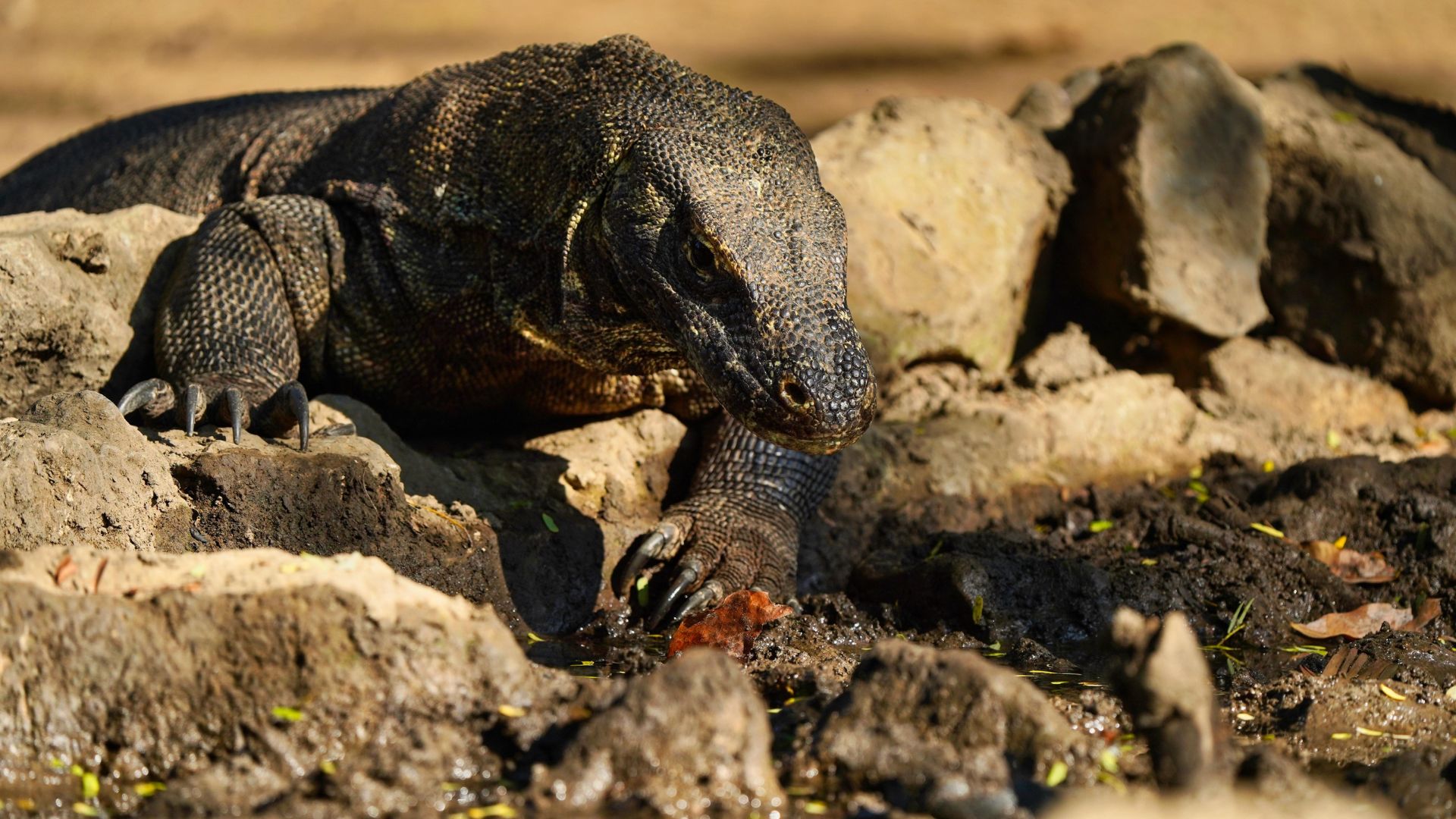
Are There Komodo Dragons in the Galápagos Islands? Myth vs Fact
Short answer
No, there are no Komodo dragons in the Galápagos Islands. Wild Komodo dragons live only in Indonesia, in Komodo National Park (Komodo, Rinca, Gili Motang, Nusa Kode) and on parts of Flores. The famous reptiles of the Galápagos are marine iguanas, land iguanas and giant tortoises.
- Komodo dragon: a monitor lizard, meat eater, up to about 3 m long, only in eastern Indonesia
- Galápagos iguanas: plant eaters, around 1 m long, only in the Galápagos (Ecuador)
- Distance: the two island groups lie on opposite sides of the Pacific Ocean
- Where to see real Komodo dragons: ranger walks on Komodo Island or Rinca Island, for example on a sailing trip from Lombok to Labuan Bajo
Every month hundreds of people search for “Komodo dragons in the Galápagos Islands”. It is an easy mix-up: both places are remote island groups, both are UNESCO World Heritage Sites, and both are famous for big reptiles that look like they come from the age of the dinosaurs. But the Komodo dragon has never lived in the wild in the Galápagos. This guide explains where the myth comes from, how the Komodo dragon differs from the Galápagos iguanas, and where you can see real Komodo dragons in their natural home.
Are there Komodo dragons in the Galápagos? The facts
The Komodo dragon (Varanus komodoensis) is found only on a few islands of the Lesser Sunda group in eastern Indonesia (Smithsonian’s National Zoo). Most of the wild population lives on Komodo and Rinca, with small groups on Gili Motang, Nusa Kode and the west and north coast of Flores. Researchers estimate about 3,500 wild dragons including juveniles, roughly 1,400 of them adults (San Diego Zoo Wildlife Alliance, based on Jessop et al. 2021). Outside Indonesia, Komodo dragons are only kept in zoos; there is no wild population anywhere else in the world, the Galápagos included.
The Galápagos Islands belong to Ecuador and lie in the eastern Pacific Ocean. Their native reptiles include giant tortoises, land iguanas and marine iguanas (Galápagos Conservancy). None of them is a monitor lizard, the family the Komodo dragon belongs to.
Why do people confuse Komodo and the Galápagos?
- Two famous “reptile islands”: Komodo and the Galápagos are probably the two best-known islands in the world for reptiles, so they often appear side by side in documentaries, school books and “wildlife bucket list” articles.
- “Dragon-like” iguanas: Galápagos marine and land iguanas are big, spiky and grey or yellow, and many photos make them look like small dragons. On a photo without anything for scale, a land iguana can look a bit like a young Komodo dragon.
- Remote volcanic islands with unique animals: both places are known for animals found nowhere else, which makes it easy to assume they share species.
- Both are UNESCO World Heritage Sites: Komodo National Park has been on the list since 1991 (UNESCO), and the Galápagos Islands are on the list too.
- Search and AI mix-ups: questions like “komodo dragon on Galápagos islands” often come from people who saw one of these animals on TV and remember the wrong island name.
Komodo dragon vs Galápagos iguanas: comparison
The Komodo dragon is a large meat eater; both Galápagos iguanas are plant eaters and much lighter. The table puts the key facts side by side.
| Komodo dragon | Galápagos marine iguana | Galápagos land iguana | |
|---|---|---|---|
| Scientific name | Varanus komodoensis (monitor lizard) | Amblyrhynchus cristatus (iguana) | Conolophus species (iguana) |
| Where it lives | Komodo, Rinca, Gili Motang, Nusa Kode and Flores, Indonesia | Rocky shores of the Galápagos Islands, Ecuador | Drier areas of the Galápagos Islands |
| Size | Typically about 70 kg; the largest verified specimen was 3.13 m and 166 kg | Up to about 1.3 m (males) and about 1.5 kg | Adults more than 0.9 m (3 ft); males up to about 13.6 kg (30 lb) |
| Diet | Carnivore: almost any meat, from rodents to deer, wild boar and water buffalo | Herbivore: algae grazed in the sea | Herbivore: low plants, shrubs, fallen fruit and cactus pads |
| Special trait | The largest living lizard, can briefly run 16 to 20 km/h | The only lizard known to forage in the ocean | Lives on land, often around cactus |
| IUCN status | Endangered (since 2021) | Vulnerable | Varies by species |
Sources: Komodo dragon – Smithsonian’s National Zoo, Natural History Museum London; marine iguana – SeaLifeBase, Natural History Museum London, National Geographic; land iguana – Galápagos Conservancy.
Interesting detail: marine iguanas can actually shrink in body length during food shortages and grow again when food returns (NHM). Komodo dragons, by contrast, are top predators that hunt animals many times heavier than any Galápagos iguana.
What lives in the Galápagos instead?
- Marine iguanas: found on almost every rocky shoreline of the islands, diving for algae.
- Land iguanas: big yellow-brown iguanas of the drier islands that feed on plants and cactus pads.
- Giant tortoises: plant eaters that feed on cactus pads, grasses and native fruit, with domed shells on the humid highlands and saddle-backed shells on the arid islands.
So if you want iguanas and giant tortoises, go to Ecuador. If you want to walk next to the world’s largest lizard, you need to go to Indonesia.
Where to see real Komodo dragons
The real Komodo dragon island is in Komodo National Park, in East Nusa Tenggara, Indonesia. Visitors can see wild dragons only on a guided walk with a park ranger on Komodo Island (Loh Liang) or Rinca Island (Loh Buaya). The islands are reached by boat, from Labuan Bajo on Flores or on a multi-day sailing trip from Lombok.
- From Lombok (4 days 3 nights): the Komodo tour from Lombok sails east past Sumbawa, with whale sharks in Saleh Bay, a ranger walk with the dragons on Komodo Island, Pink Beach and Padar, and ends in Labuan Bajo.
- From Labuan Bajo to Lombok: the Labuan Bajo to Lombok boat trip visits the dragons at the start of the trip and sails west to Lombok.
- Choose your boat: deluxe FRS Menami (managed by Golden Island Cruises), luxury KLM Sehat Elona (our official boat partner) or the standard KM Pulau Mas 88 (partner boat of Golden Island Cruises).
The Lombok – Labuan Bajo sailing season runs from April to November; there are no sailings from December to March because of the west monsoon. Read more about the animal in our complete Komodo dragon guide, find out why Komodo dragons are only found in Indonesia and whether Komodo dragons can swim.
Frequently asked questions
Are there Komodo dragons in the Galápagos Islands?
No. Wild Komodo dragons live only in Indonesia, in Komodo National Park and on parts of Flores. The Galápagos have marine iguanas, land iguanas and giant tortoises, but no monitor lizards.
What is the big lizard in the Galápagos called?
Most likely a Galápagos land iguana or a marine iguana. Both are plant eaters and much smaller than a Komodo dragon.
Is a marine iguana related to the Komodo dragon?
Only distantly. Both are lizards, but the marine iguana is an iguana and the Komodo dragon is a monitor lizard (genus Varanus), a different family.
Which island has Komodo dragons?
Komodo Island and Rinca Island have the largest populations, with small groups on Gili Motang, Nusa Kode and Flores. All are in eastern Indonesia.
Can you see Komodo dragons from Lombok?
Yes, on a 4 days 3 nights boat trip from Lombok to Labuan Bajo that stops at Komodo Island for a ranger walk. Trips run from April to November.
Plan your Komodo boat trip
Sail between Lombok and Labuan Bajo in 4 days 3 nights with whale sharks, Komodo dragons, Padar and Pink Beach.

Lombok to Labuan Bajo 4D3N
Kenawa, whale sharks in Saleh Bay, Komodo dragons, Pink Beach and Padar. Ends in Labuan Bajo.
From IDR 3,800,000 / person
Labuan Bajo to Lombok 4D3N
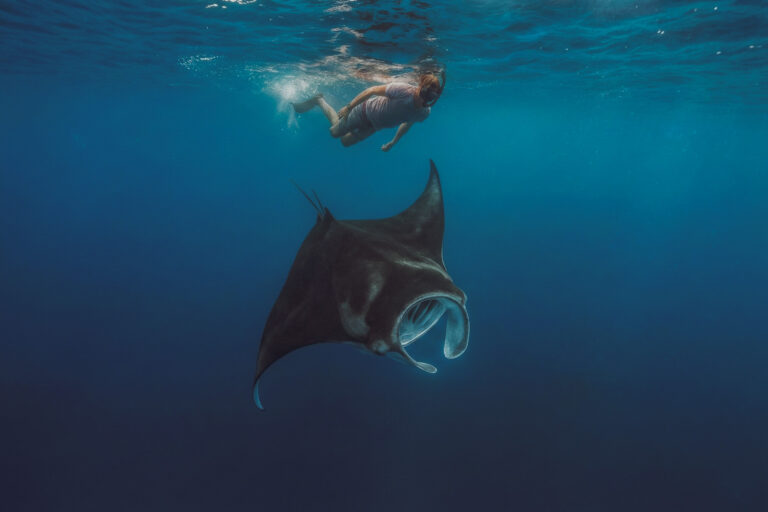
Komodo National Park first: Padar, Pink Beach, Komodo dragons and Manta Point, then Satonda, Moyo and Kenawa back…
From IDR 3,300,000 / person