
Home > Blog
The Komodo dragon is often described as a prehistoric animal, a living dinosaur, or an ancient reptile that survived into the modern world. These labels are common in documentaries, travel blogs, and science discussions. But why is the Komodo dragon called a prehistoric animal from a scientific perspective?
The answer is rooted in evolutionary biology, fossil evidence, and the Komodo dragon’s status as an evolutionary relic. Far from being just a myth or exaggeration, this description reflects the species’ deep evolutionary history and biological continuity with giant reptiles that existed millions of years ago.
This article explores the scientific explanation behind the Komodo dragon’s prehistoric reputation, including its fossil lineage, anatomy, island evolution, and ecological role.
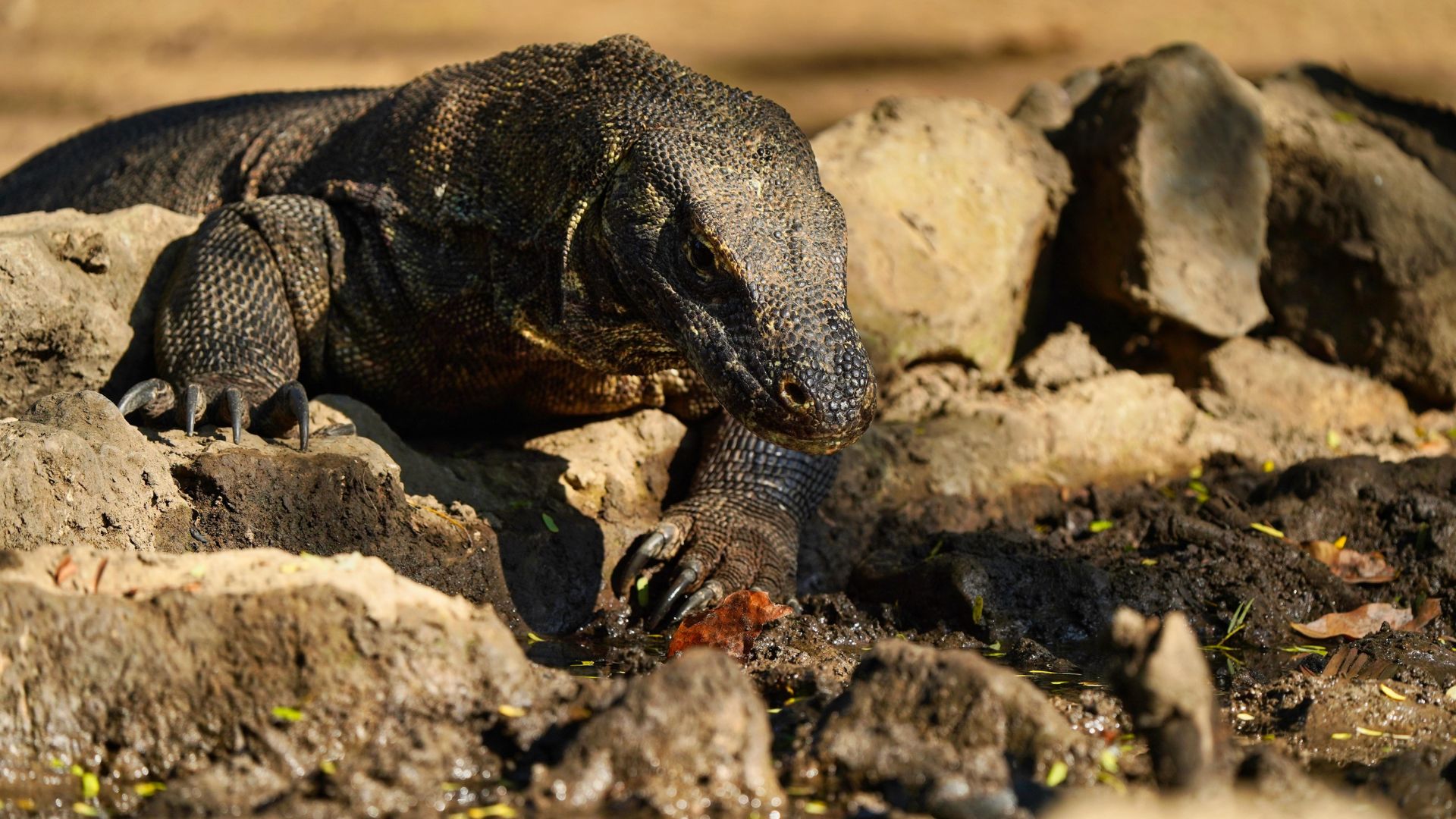
The Komodo dragon (Varanus komodoensis) is the largest living lizard species. Adult individuals can exceed 3 meters in length and weigh over 70 kilograms. Native to a small group of Indonesian islands — Komodo, Rinca, Flores, and nearby islets — this reptile is an apex predator that dominates its ecosystem.
Its size, armored skin, serrated teeth, and predatory behavior give it an appearance strikingly similar to ancient reptiles seen in prehistoric reconstructions. However, the Komodo dragon is not prehistoric simply because it looks ancient. Its evolutionary lineage is what makes it scientifically remarkable.
Fossil records show that monitor lizards (family Varanidae) have existed for at least 15–20 million years. During this period, giant varanid species spread across Asia and Australia.
One of the most famous prehistoric relatives is Megalania (Varanus priscus), a giant lizard that lived in Australia until around 40,000 years ago. Megalania may have reached lengths of over five meters, making it one of the largest land predators of the late Pleistocene.
Molecular phylogenetic studies indicate that the Komodo dragon shares a close evolutionary relationship with these giant prehistoric monitor lizards. This makes the Komodo dragon a modern descendant of an ancient reptile lineage that once produced true giants.
Because of this continuity, scientists often describe the Komodo dragon as an evolutionary relic — a surviving branch of a once widespread prehistoric group.
One reason the Komodo dragon is called a prehistoric animal is its morphological conservatism. This term refers to body designs that remain stable over long evolutionary timescales because they are highly effective.
The Komodo dragon’s:
* powerful skull and jaws
* serrated, knife-like teeth
* muscular limbs
* thick protective scales
closely resemble fossil varanids. These traits have proven so successful for predation that natural selection preserved them for millions of years.
The Komodo dragon is still evolving genetically, but its basic body architecture did not require radical redesign. In evolutionary biology, long-term stability often indicates optimal adaptation rather than stagnation.
Despite being labeled prehistoric, the Komodo dragon is not primitive in a simplistic sense. Research shows it has surprisingly advanced physiological features.
Komodo dragons possess:
* a highly efficient cardiovascular system
* venom glands that weaken prey
* high aerobic capacity for active hunting
Their venom contains anticoagulant and shock-inducing compounds that accelerate prey collapse after a bite. This combination of ancient morphology and advanced physiology creates what scientists call an evolutionary mosaic— a mixture of old and new traits.
This blend reinforces the perception of the Komodo dragon as a bridge between prehistoric reptiles and modern predators.
Geography plays a crucial role in the Komodo dragon’s survival.
During the ice ages of the Pleistocene epoch, sea levels were much lower. The Indonesian islands where Komodo dragons live were connected to larger landmasses. When sea levels rose, the populations became isolated.
This isolation produced several evolutionary effects:
* reduced competition with large mammals
* stable ecological conditions
* limited external evolutionary pressure
Island stability allowed the Komodo dragon to preserve ancestral traits. Scientists classify it as a relict species — a surviving representative of a once widespread prehistoric lineage.
It is important to clarify a common misconception: the Komodo dragon is not a dinosaur and not a literal living fossil.
It continues to evolve like all species. The label “prehistoric animal” is interpretive, meaning it retains features that strongly resemble ancient reptiles. It represents evolutionary continuity, not evolutionary stagnation.
In scientific terms, the Komodo dragon is a modern species carrying deep-time biological heritage.
Komodo dragons function as apex predators, controlling populations of deer, pigs, and other large prey. This ecological structure resembles prehistoric ecosystems dominated by megafauna predators.
Some island ecosystems still preserve food webs similar to those of the Pleistocene. The Komodo dragon’s presence is a rare example of a predator lineage that survived major extinction waves that eliminated many other giant reptiles and mammals.
This ecological continuity strengthens its identity as a living window into Earth’s prehistoric past.
The Komodo dragon is more than a tourist attraction — it is a biological archive representing millions of years of evolution. Threats include:
* climate change
* habitat loss
* human encroachment
* declining prey populations
Losing the Komodo dragon would erase a unique evolutionary branch. Conservation therefore has global scientific importance, not just local ecological value. Protecting Komodo dragons means preserving one of the last surviving representatives of a prehistoric reptile lineage.
The Komodo dragon is called a prehistoric animal because it represents an ancient evolutionary lineage that survived into the modern era. Fossil evidence, morphological stability, island isolation, and ecological function all support its status as an evolutionary relic.
It is not a dinosaur frozen in time, but a modern species carrying the biological legacy of giant prehistoric reptiles. The Komodo dragon stands as a rare living connection to Earth’s deep evolutionary history.
Golden Island Cruises – Komodo’s #1 Trip Partner for Unforgettable Adventures. Book with Confidence with Your Official Komodo Travel Partner and Set Sail to Paradise!
Copyright 2022 © Golden Island Cruises| Powered by PT PULAU MAS ADIDAYA ABADI
Need more Help, Chat us Via What's App
