
Home > Blog
There are only a few places left on Earth where you can walk beside creatures that seem to have stepped straight out of prehistory. Komodo Island in Indonesia is one of those rare places. Here, ancient reptiles roam freely across golden hills, dry savannas, and turquoise coastlines. Visiting Komodo is not just a vacation — it is an encounter with a living piece of natural history.
Located between Flores and Sumbawa, Komodo National Park is one of Indonesia’s most spectacular protected areas and a globally recognized conservation site. Home to the legendary Komodo dragon, this UNESCO World Heritage Site offers travelers a once-in-a-lifetime chance to witness raw wilderness while supporting vital conservation efforts.
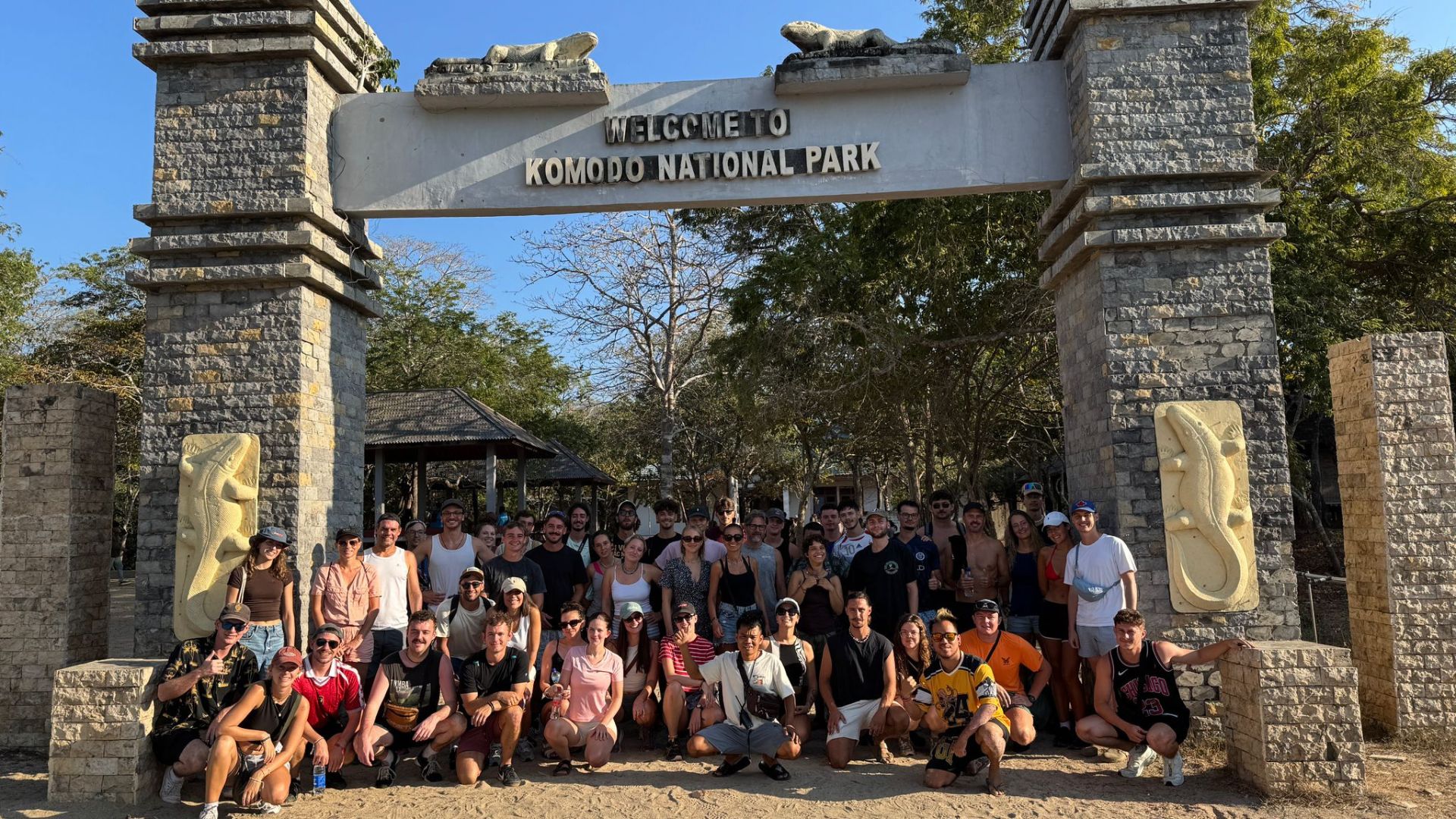
The Komodo dragon (Varanus komodoensis) is the largest living lizard on Earth, growing up to three meters long. These powerful reptiles evolved in isolation for millions of years on a small cluster of islands in eastern Indonesia.
Today, they can be found primarily on:
Each island presents a unique landscape — volcanic ridges, wide savannas, mangrove forests, and crystal lagoons. Together, they form a fragile ecosystem where dragons, deer, buffalo, and tropical birds coexist in an ancient predator-prey balance.
Komodo dragons are not just prehistoric survivors. They are apex predators that regulate herbivore populations and maintain ecological stability. Conservationists consider them a keystone species, meaning the survival of the entire ecosystem depends on their presence.
Established in 1980, Komodo National Park was originally created to protect the Komodo dragon. Over time, its mission expanded to include marine conservation, as the surrounding waters contain some of the richest biodiversity on the planet.
Beneath the surface lies a marine paradise:
Exploring the park by boat allows travelers to experience both terrestrial wilderness and underwater ecosystems in one seamless journey.
Komodo Island is the symbolic heart of the national park. The terrain feels cinematic — dusty trails wind through dry forests where dragons rest in the shade.
With licensed park rangers, visitors safely trek through dragon territory. Early morning is the best time to visit, when dragons are most active and temperatures are cooler. You may see them crossing trails, sunbathing, or guarding nesting sites.
Nearby, Pink Beach offers a stunning contrast to the rugged wilderness. Its soft pastel sand and clear water provide perfect conditions for swimming and snorkeling after a hike.
Loh Liang is quieter, less crowded, and offers one of the most authentic wildlife experiences in the park. The island’s terrain is gentler, with winding paths and open grasslands where dragons roam freely near the coast.
Encounters here feel more intimate. The silence is deeper, the wilderness more present. Loh Liang is also home to Timor deer, monkeys, and water buffalo — the primary prey species of the Komodo dragon. Watching this ecosystem in motion offers a rare glimpse into a predator-driven world that has changed little for thousands of years.
Rising tourism once threatened the fragile balance of Komodo’s ecosystem. Today, Indonesia enforces strong conservation policies to protect both wildlife and habitat.
Key measures include:
Ethical tourism is essential. Visiting Komodo is not only about adventure — it is about protecting a living archive of evolution.
Travel tips for Komodo National Park:
Responsible travelers help ensure Komodo dragons survive for future generations.
Most journeys begin from eastern Lombok or Labuan Bajo. Luxury phinisi liveaboard cruises such as Golden Island Cruises provide a sustainable way to explore the region.
Sailing with Golden Island Cruises combines comfort with environmental respect. The vessels feature spacious decks, elegant cabins, and professional crews trained in ethical wildlife interaction.
Typical itineraries include:
Guests enjoy snorkeling with sea turtles, hiking panoramic viewpoints, and observing wildlife while maintaining eco-friendly standards.
Luxury and sustainability can coexist — and Komodo proves it.
The magic of Komodo lies not only in its dragons or landscapes, but in the feeling it creates: awe, humility, and connection. Standing a few meters from a Komodo dragon is not just wildlife viewing — it is a meeting with one of evolution’s greatest survivors.
Traveling responsibly turns visitors into guardians of this ancient ecosystem. Every ethical journey contributes to the dragons’ future.
Komodo is more than a destination. It is a reminder of what the world once was — and what it can still be when humans and nature coexist with respect.
Experience Komodo the right way with Komodo Tour Indonesia and Golden Island Cruises. Ethical travel, expert guidance, and unforgettable encounters await in one of Earth’s last true wilderness frontiers.
Book your Komodo Island adventure and step into a world where prehistory still breathes
Golden Island Cruises – Komodo’s #1 Trip Partner for Unforgettable Adventures. Book with Confidence with Your Official Komodo Travel Partner and Set Sail to Paradise!
Copyright 2022 © Golden Island Cruises| Powered by PT PULAU MAS ADIDAYA ABADI
Need more Help, Chat us Via What's App
