
Home > Blog
Gems are known for their rich colors. Formed through long geological processes from one or a combination of chemical components, precious stones gain high value due to their rarity and vibrant hues.
However, this article is not about gemstones—it is about an island. Much like a gem, this island is equally dazzling and valuable, not to be owned, but to be visited.
The island in question is Padar Island, located in eastern Indonesia. Exotic is the word most often used by those who have set foot on it. With its extraordinary natural beauty, Padar Island has become one of the most iconic tourist destinations in East Nusa Tenggara (NTT).
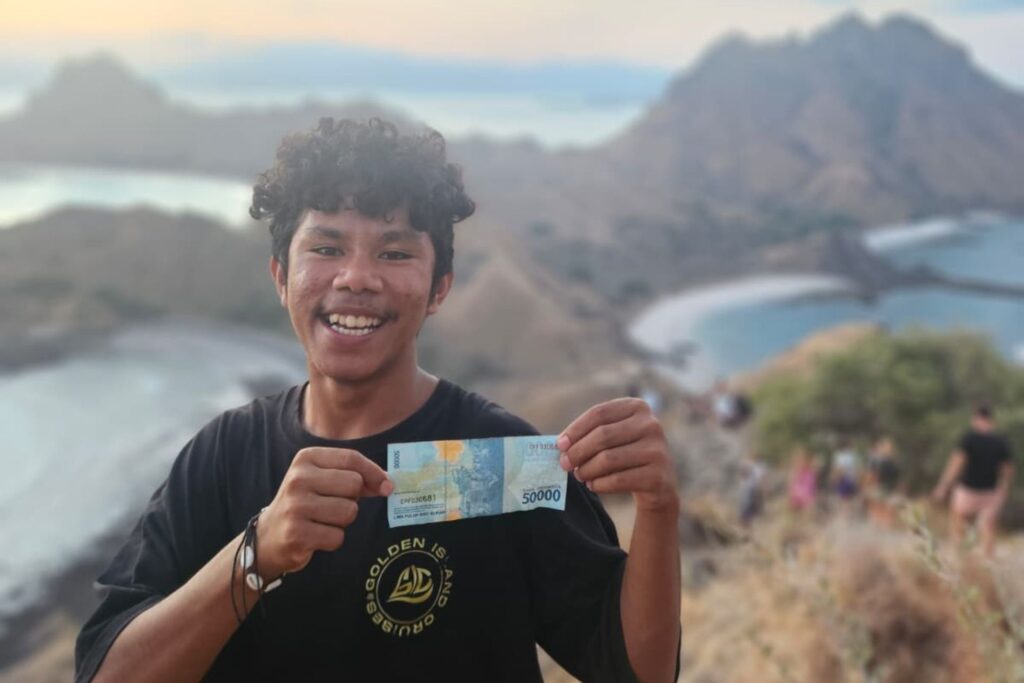
Padar Island, one of Indonesia’s natural icons, is the third-largest island in Komodo National Park, after Komodo Island and Rinca Island. Its breathtaking landscape was even immortalized on the IDR 50,000 banknote issued in 2016, making it familiar to people across the country.
Though Padar Island may seem distant to many, it is actually quite “close”—its image may already be resting in our wallets.
When discussing tourist destinations in Labuan Bajo, West Manggarai Regency, people often immediately think of Komodo Island, the natural habitat of the Komodo dragon (Varanus komodoensis). However, these giant reptiles can also be found on other islands, such as Rinca Island.
Does that mean tourism in West Manggarai is limited to seeing Komodo dragons on just those two islands? Certainly not. There are many other remarkable destinations to explore—one of them is Padar Island.
Padar Island lies between Komodo Island and Rinca Island and covers an area of only 2,017 hectares, making it the smallest among the three.
Interestingly, Komodo dragons are no longer found on Padar Island. According to the book Komodo Dragons by Anne Welsbacher, their absence is linked to a massive wildfire in the 1980s that destroyed vegetation and wildlife, including Komodos and their prey. Those that survived faced food shortages and eventually swam—up to 300 meters, according to experts—to neighboring islands in search of survival.
Despite the absence of Komodo dragons, Padar Island remains part of Komodo National Park, a UNESCO World Heritage Site. Several species of wildlife can still be found here, especially the Timor deer (Cervus timorensis).
During a media visit to Padar Island, several Timor deer were spotted relaxing along the beach and beneath the pier. With no rivers or freshwater sources on the island, a question naturally arises: how do they survive?
“They drink seawater—they’ve adapted,” explained Karel, a Flores native working with the Labuan Bajo Flores Tourism Authority (BOPLBF). These deer are relatively friendly, as long as visitors approach them slowly and respectfully.
The best time to visit Padar Island is early in the morning. Departing from Labuan Bajo, travelers can reach the island by speedboat or traditional phinisi boat, with a travel time of approximately 3–4 hours.
Upon arrival, visitors are greeted by a pristine white-sand beach near the dock. However, to experience the island’s true beauty, one must make an effort—a steep hike with a slope of up to 45 degrees.
The challenges include intense heat, especially at midday, and minimal vegetation, as the island is dominated by grasslands with very few shady trees.
“Don’t force yourself to reach the summit,” advised an official from Komodo National Park Authority (BTNK). Dehydration is another concern, which is why guides strongly recommend bringing sufficient drinking water.
The hill rises nearly 300 meters above sea level, and the absence of stairs near the top makes the climb more demanding. The sandy and slippery terrain requires caution to avoid accidents.
For those who reach the top, the reward is extraordinary. From the summit, visitors can clearly see three beaches with different-colored sand: white to the south, black to the north, and pink to the northeast.
Black sand beaches are formed from volcanic rocks and can also be found in places like Hawaii and California, USA.
The Pink Beach, however, is among the rarest in the world. According to local communities, parrotfish play a key role in creating the pink sand. These fish feed on reddish soft corals (octocorallia), grind them while eating, and excrete fine coral particles that eventually wash ashore—giving the beach its distinctive pink hue.
Though small in size, Padar Island is rich in charm. Renowned travel media such as Atlas Obscura have even listed its beaches among the world’s most unique.
As part of Komodo National Park, Padar Island stands alongside Komodo Island, Rinca Island, and Gili Motang as a recognized UNESCO World Heritage Site.
Look closely at the IDR 50,000 banknote (2016 edition)—behind the image of the Legong dancer from Bali, you’ll find the stunning silhouette of Padar Island.
Have you checked your wallet yet?
Labuan Bajo has been designated as Indonesia’s first Super Premium Tourism Destination. The goal is to accelerate sustainable tourism development, enhance visitor comfort, boost national revenue, and ensure environmental preservation.
“Designating Labuan Bajo as a super premium destination is meant to improve community welfare, increase state revenue, and protect nature,” said Indonesia’s former Minister of Tourism and Creative Economy, Wishnutama, during his visit in late 2019.
Currently, Padar Island—also known as Gili Padar—offers facilities such as diving and snorkeling spots, as well as speedboat access. As part of the super premium development plan, additional infrastructure like rest areas and culinary centers will be introduced.
Padar Island is open 24 hours daily, with entrance fees of IDR 5,000 for domestic tourists and IDR 150,000 for international visitors.
As a protected area within Komodo National Park, visitors are encouraged to maintain cleanliness and respect the ecosystem. With sustainable management, Padar Island is expected to remain a natural paradise for generations to come.
Padar Island is a true hidden gem of Indonesia—a symbol of unparalleled natural wealth that captivates not only the nation but the world. If you are seeking a destination with extraordinary beauty and unforgettable landscapes, Padar Island is a must-visit.
3 Island Liveaboard offers a relaxed and immersive way to explore the breathtaking waters of Komodo National Park and the Flores Sea. Designed for travelers who want to experience the islands at a comfortable pace, the liveaboard combines the freedom of sailing with the simple pleasure of waking up surrounded by turquoise waters, dramatic landscapes, and untouched tropical scenery.
| Trip Duration | Room Type | Package Type | Price (IDR) / Pax |
|---|---|---|---|
| 3 Days 2 Nights | Private Cabin | Open Trip | IDR 4.450.000 |
| 3 Days 2 Nights | Shared Cabin | Open Trip | IDR 3.450.000 |
| 3 Days 2 Nights | Extra Bed in Private Cabin | Open Trip | IDR 3.000.000 |
